
Food and fasting: two major levers to add life to the years
Healthy aging depends not only on the number of years lived, but on the body's ability to remain adaptable, energetic and functional over time. In this perspective, feeding and intermittent fasting appear as two complementary levers capable of acting on several major biological mechanisms, such as low-grade inflammation, intestinal barrier, autonomous nervous system and mitochondrial function.
The challenge is not to look for an extreme method, but to create a more stable, resilient and beneficial biological environment for real health. Well-built anti-inflammatory nutrition, combined with controlled periods of digestive rest, can help support this dynamic.
Why does diet matter so much?
The intestinal microbiota and intestinal barrier play a central role in the overall balance of the organism. When this barrier works well, it limits the passage of pro-inflammatory compounds into circulation and thus helps to reduce low-grade chronic inflammation associated with pathological aging.
Diet is directly involved in this balance because it influences microbial diversity, the production of useful metabolites such as short chain fatty acids, and the quality of the immune response. In other words, eating well is not only a means of meeting energy needs: it also helps the body to maintain a more calm, protective and adaptive organic land.
The Mediterranean diet as a nutritional basis
The Mediterranean diet is now one of the best documented food models to support healthy longevity. This approach is based on a strong presence of plants, fibres, legumes, olive oil, fatty fish and foods rich in polyphenols, which act together on inflammation, cell oxidation and the intestinal ecosystem.
Prebiotic fibers feed intestinal bacteria capable of producing butyrate, a short chain fatty acid important for colonocyte health and immune modulation. Omega-3s, on the other hand, contribute to the resolution of inflammation, while polyphenols, such as olive oil and red fruit, support cellular antioxidant defences.
Stronger adherence to the Mediterranean model was also associated with better variability in heart rate in the Emory Twins Heart Study, leading to better autonomous tone and improved physiological adaptability.

Intermittent fasting: digestive rest with systemic effects
Intermittent fasting can be understood as a form of metabolic hormesis, i.e. moderate stress that can trigger beneficial adaptive mechanisms. By creating food-free windows, the body gradually changes its mode of operation and activates several biological protection and repair responses.
Among the mechanisms most often highlighted are the metabolic shift, in which the body gradually moves away from glucose-centered functioning to further mobilize fatty acids and produce ketone bodies. This transition reflects better metabolic flexibility, which is central to the published synthesis work on the subject.
Fasting is also associated with several key processes: autophagy, mitophage, mTOR inhibition, digestive rest and ketogenesis. In this sense, it should not be seen only as a point caloric restriction, but as a biological signal capable of promoting cell recycling, mitochondrial renewal and a potentially more favourable intestinal environment.
Autophagy, mitophage and cellular aging
Autophagy is an internal recycling mechanism by which the cell identifies, degrades and reuses certain damaged or less efficient components. In the context of aging, this makes sense because the accumulation of dysfunctional elements contributes to the loss of cellular efficiency.
Mitophagia is a specialized form, specifically targeting altered mitochondria. Since mitochondria play a central role in the production of ATP, therefore in cellular energy, their renewal is a major challenge in maintaining good metabolic efficiency and limiting the overproduction of free radicals.
Intermittent fasting can thus be considered as a time of cleaning and optimisation, which can support the overall energy quality of the organism.
Fast and intestinal barrier
By leaving more time without food intake, the continuous stress of the digestive tract is reduced, which could help repair the tight junctions of the intestinal barrier and help limit excessive permeability.
This idea remains consistent with recent literature, which describes intermittent fasting as a strategy that can support intestinal homeostasis, modulate inflammation and promote mechanisms involved in maintaining the digestive barrier. Human data are still under development according to subjects and protocols, but the general orientation is in this direction.
In a functional reading, this means that a well calibrated digestive rest period can complement a quality diet. Fasting does not replace good nutrition, but it can strengthen its effects by restoring useful recovery times to the digestive system.
A possible impact on the autonomic nervous system
By reducing the inflammatory load and improving the intestinal and mitochondrial environment, intermittent fasting could also support the autonomous nervous system. In particular, it is associated with a potential improvement in parasympathic tone and HRV, although this effect depends heavily on the overall context, stress, sleep and health status of the person.
This vision is part of a comprehensive approach to health, where several biological pillars interact continuously. Food and fasting therefore do not work in isolation: they participate in a more favourable terrain for recovery, physiological stability and a sense of biological safety.
Food and fasting do not oppose
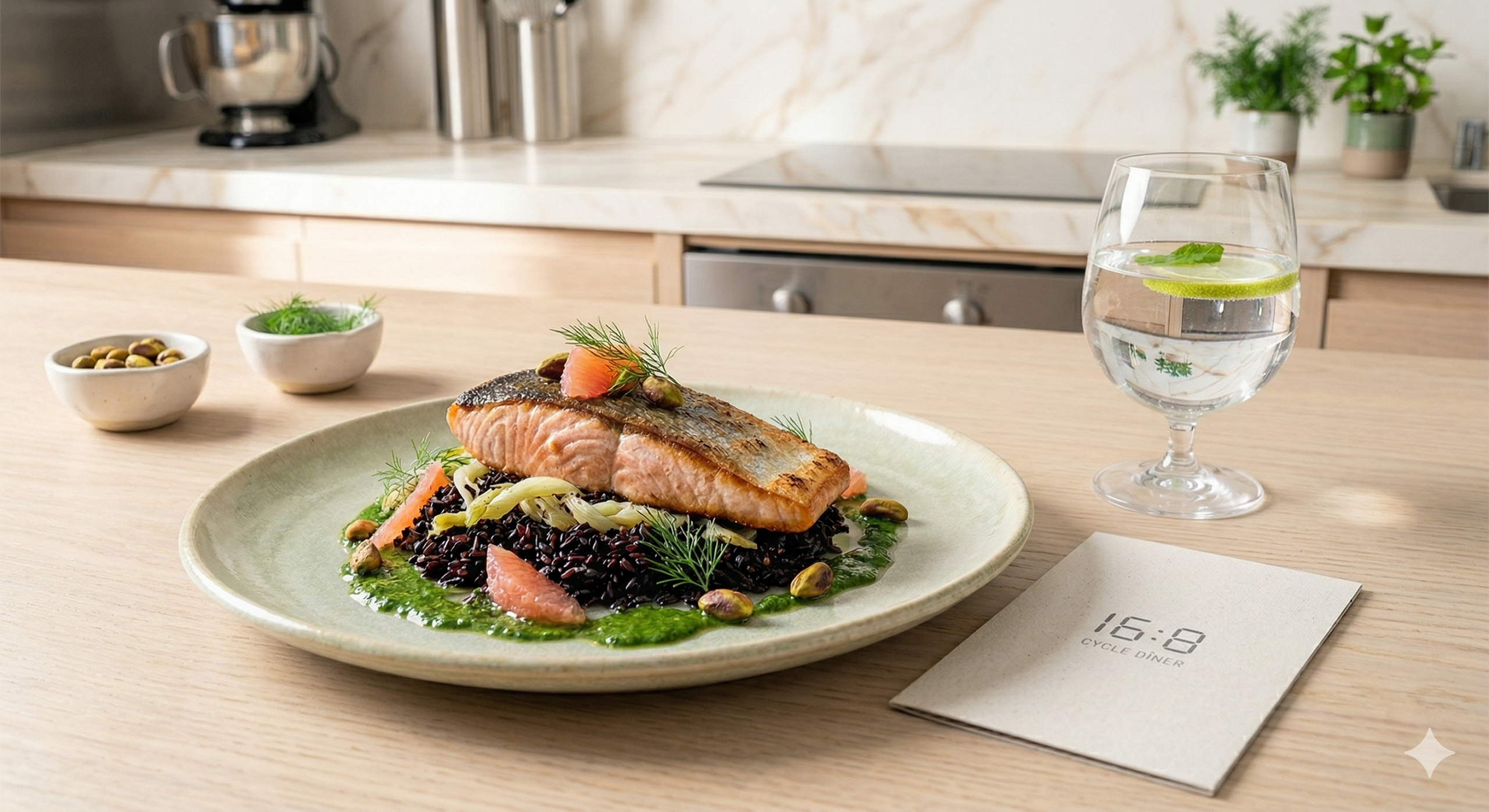
Fasting only makes sense if it is part of a structured, anti-inflammatory and nutritious diet. It is not about eating less than any other way, but intelligently alter feeding periods and periods of digestive rest in a coherent setting.
In other words, the quality of the plate remains the basis. Intermittent fasting then comes as an additional tool, capable of amplifying some adaptation mechanisms already supported by a Mediterranean diet rich in fibers, polyphenols, omega-3 and low processed foods.
A realistic and sustainable approach
In a sustainable health approach, the aim is not to follow a rigid method, but to build habits that can preserve large biological functions over time. The Mediterranean diet acts as a bottom-up anti-inflammatory strategy, while intermittent fasting represents metabolic stimulation that can strengthen the body's ability to adapt.
It is precisely this complementarity that makes their association interesting. Together, they can help support the microbiota, reduce inflammatory pressure, improve mitochondrial effectiveness and promote a physiological terrain that is more conducive to healthy longevity.
Our central approach
At the centre, we consider food and fasting as powerful levers to sustain vitality, digestive balance and overall health. Our approach is designed to be personalized, progressive and tailored to each person, in order to integrate these strategies in a realistic and coherent way in everyday life.
In case of digestive discomfort, intestinal disorders or suspicion of microbiota imbalance, Dr. Michel Golay proposes consultations dedicated to the health of the digestive tract and microbiota, in order to provide targeted, accurate and aligned with each other's needs.
To benefit from a personalized assessment and be accompanied with an approach adapted to your situation, you can make an appointment at the centre.
__________________________
@Lonhea – Patented Method

