
heart rate variability (HRV): a valuable tool to optimize your training
Are you a runner and looking to optimize your performance while preserving your health? Heart rate variability (HRV) may well become your best ally. As the Escalade Race approaches Geneva, discover how this simple but powerful indicator can transform your training approach.
. What is HRV?
Heart rate variability does not just measure your beat count per minute. It reflects something much more subtle:the temporal fluctuations in the intervals between your consecutive heartbeats.
Contrary to what one might think, a healthy heart does not beat like a perfectly regular metronome. On the contrary, it has slight variations from one beat to another. This variability is a major non-invasive biomarker of your autonomic nervous system and your cardiovascular fitness.
. The fascinating link between breathing and heart rate
Have you ever noticed that your heart accelerates slightly when you inspire and slow down when you expire? This natural phenomenon is calledRespiratory Sinus Arrhythmia (RSA)or more recentlyRespiratory Heart Rate Variability (RespHRV).
How does it work?
Your brain constantly coordinates your breathing and heart rate. This coordination represents 60 to 70% of your natural cardiac variability. The remaining 30 to 40% come from peripheral mechanisms, such as the receptors in your lungs that react to changes in respiratory volume.
Key factors influencing this respiratory variability:
- Chest mobility: a better expansion of your chest cage improves your cardiac variability
- Diaphragmatic function: the excursion of your diaphragm determines the effectiveness of this modulation
- Respiratory volume: the depth of your breathing activates the receptors that modulate your heart
. Why is HRV important for runners?
A recovery indicator
The HRV has become an essential tool for assessing your recovery status. A high HRV usually indicates that your body has recovered well and that your parasympathetic nervous system (the one that promotes rest and recovery) works well.
Conversely, a reduced HRV may report:
- Accumulated fatigue
- Risk of overtraining
- Physiological or psychological stress
- Systemic inflammation
A marker of adaptability
The higher your heart variability, the faster your body can adapt to changes. This is particularly crucial for riders who alternate between different intensity of effort.
. The different components of HRV
The HRV can be analyzed in several ways, each revealing different aspects of your physiology:
Time indices
RMSSD (Root Mean Square of Successive Differences)reflects the rapid changes in your heart rate (less than a second) and is the best marker of your parasympathic activity – the one that helps you recover.
SDNN (Standard Deviation of Normal-to-Normal interval): represents the overall variability over a given period. Over 24 hours, this index incorporates your circadian rhythms and your level of physical activity.
Frequent components
High frequency (HF): directly related to your breathing, it mainly reflects your parasympathic activity.
Low frequency (LF)In contrast to what was once thought, this component primarily reflects the function of your baroreceptors (which regulate your blood pressure) rather than just sympathetic activity.
Very low frequency (VLF)This is perhaps the most interesting indicator! The VLF isthe most powerful predictoryour long-term cardiovascular health. It reflects your basic adaptability and is influenced by:
- Your level of regular physical activity
- Your level of inflammation
- Your hormonal balance
- Your thermoregulatory system
Cardiovascular risk thresholds based on LSV
- VLF < 300 ms2: very high risk – requires thorough monitoring
- VLF 300-600 ms2: moderate risk – enhanced surveillance recommended
- VLF > 600 ms2: good prognosis – continue on this path!
. Practical applications for your training
1. Optimize your recovery with breathing
The optimal respiratory frequency to improve your HRV and promote recovery is about6 cycles per minute(5 seconds of inspiration, 5 seconds of exhalation). This frequency corresponds to the « resonance » your cardiovascular system.
Practical exercise:
- Sit comfortably in a lying position
- Breathe slowly: 5 seconds to inspire, 5 seconds to expire
- Practice 10 to 20 minutes a day
- You can use a HRV biofeedback app to view your progress
2. Improve your chest mobility
Your ability to breathe well directly influences your heart variability. Simple exercises can make the difference:
- Spinal mobilizationthoracic (T1-T12)
- Thoracic rotation exercises
- Intercostal muscle removals
- Specific work of the diaphragm
3. Adapt your training load
By regularly measuring your HRV (ideally every morning when you wake up), you can:
- Identify days when your body is ready for intense sessions
- Detect early signs of fatigue before they impact your performance
- Adjust your program in real time according to your recovery state
4. Boost your VLF in the long term
To improve this vital cardiovascular predictor:
Regular physical activity: The effect is particularly marked with moderate endurance exercises (60-75% of your maximum heart rate), performed at least 3 times a week for 30-45 minutes.
Ignition management: Anti-inflammatory diet, quality sleep and chronic stress management help improve your LSV.
Hormonal balance: A good hormonal balance, including optimal levels of testosterone in men, is associated with better VLF.
. How to measure your HRV?
Measurement methods
Many portable devices now measure your HRV:
- Connected watches and fitness trackers
- Cardio-frequency meter belts
- Smartphone applications with photo sensor
- Specialized medical devices
. Attention and limitations
HRV is not a magic number
It is essential to understand that the HRV should be interpreted in a nuanced manner:
Significant individual variability: your « Good » HRV can be very different from that of another runner. Therefore, longitudinal monitoring (your own trends over time) is more relevant than comparison to general standards.
Many influence factors :
- Age (natural decline after 30 years)
- Gender (generally 8-11% lower values for women)
- Medicines (beta blockers, anticholinergics, etc.)
- Basic heart rate
- Hydration, alcohol consumption, sleep quality
A multiparametric approach
Never rely on a single HRV index. The optimal approach combines:
- Several HRV indices (temporal and frequent)
- Your subjective sensations
- Other indicators such as resting heart rate, sleep quality
- Your life context (stress, nutrition, etc.)
. Before the Stroke Race: Use the HRV intelligently
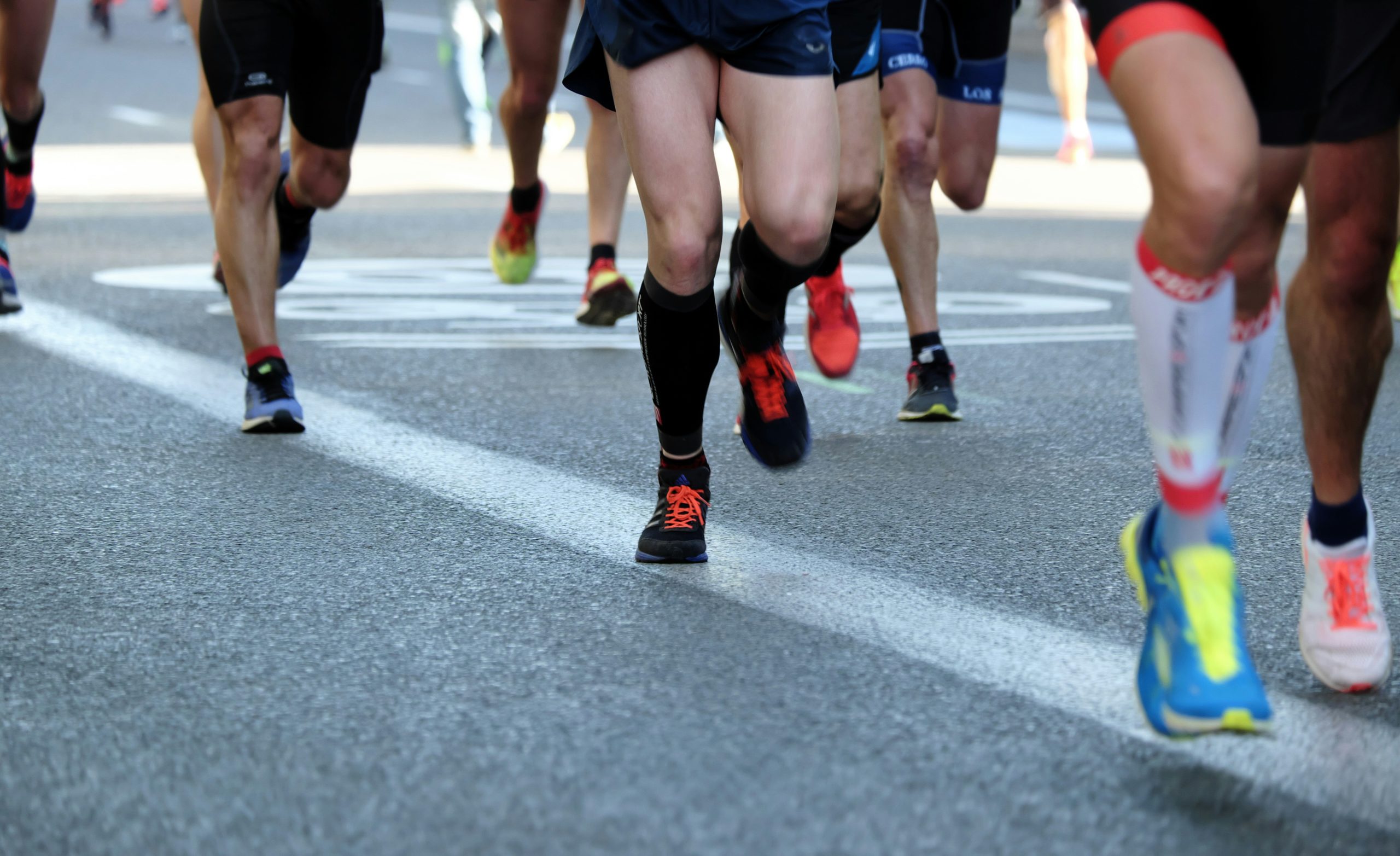
As you approach a competition like the Escalade Race, the HRV can help you:
- Optimize your sharpening: gradually reduce the training volume while monitoring that your HRV is maintaining or increasing, sign of good recovery
- Avoid last minute overtraining: if your HRV falls significantly in the days before the race, this is a clear signal to favor rest
- Manage your pre-competition stressUse consistent breathing exercises (6 cycles/min) to calm your nervous system and improve your readiness
- Adjust your strategy: an optimal HRV on D-Day can give you confidence to go on your target pace
. Conclusion
Heart rate variability is much more than just a figure to follow on your connected watch. It'sa window on how your autonomic nervous system worksand your physiological adaptability.
For riders, the HRV offers a valuable tool for:
- Customize training according to the actual recovery state
- Preventing Overtraining and Injury
- Optimize long-term performance
- Improving overall cardiovascular health
The most effective approach? Combine regular measurement of your HRV with targeted interventions: consistent breathing, chest mobility, regular physical activity and inflammation management. This holistic approach will not only improve your performance, but also your long-term health and well-being.
So, ready to integrate HRV into your preparation for the Escalade Race? Your heart will thank you!
__________________________
This article is based on the latest scientific knowledge of heart rate variability. For a personalized assessment and advice tailored to your situation, do not hesitate to contact us.
@Lonhea – Patented Method

