
Food fibers, allied with your digestion, your immunity and even your morale
Food fibers are often associated with the simple prevention of constipation. In reality, their role goes much further: they feed the billions of bacteria that live in our intestine, strengthen our digestive barrier, communicate with our brain via a nerve called the vague nerve, and even participate in our immunity. Decryption of these fascinating mechanisms, and especially their very concrete implications for your daily well-being.
What exactly are dietary fibers?
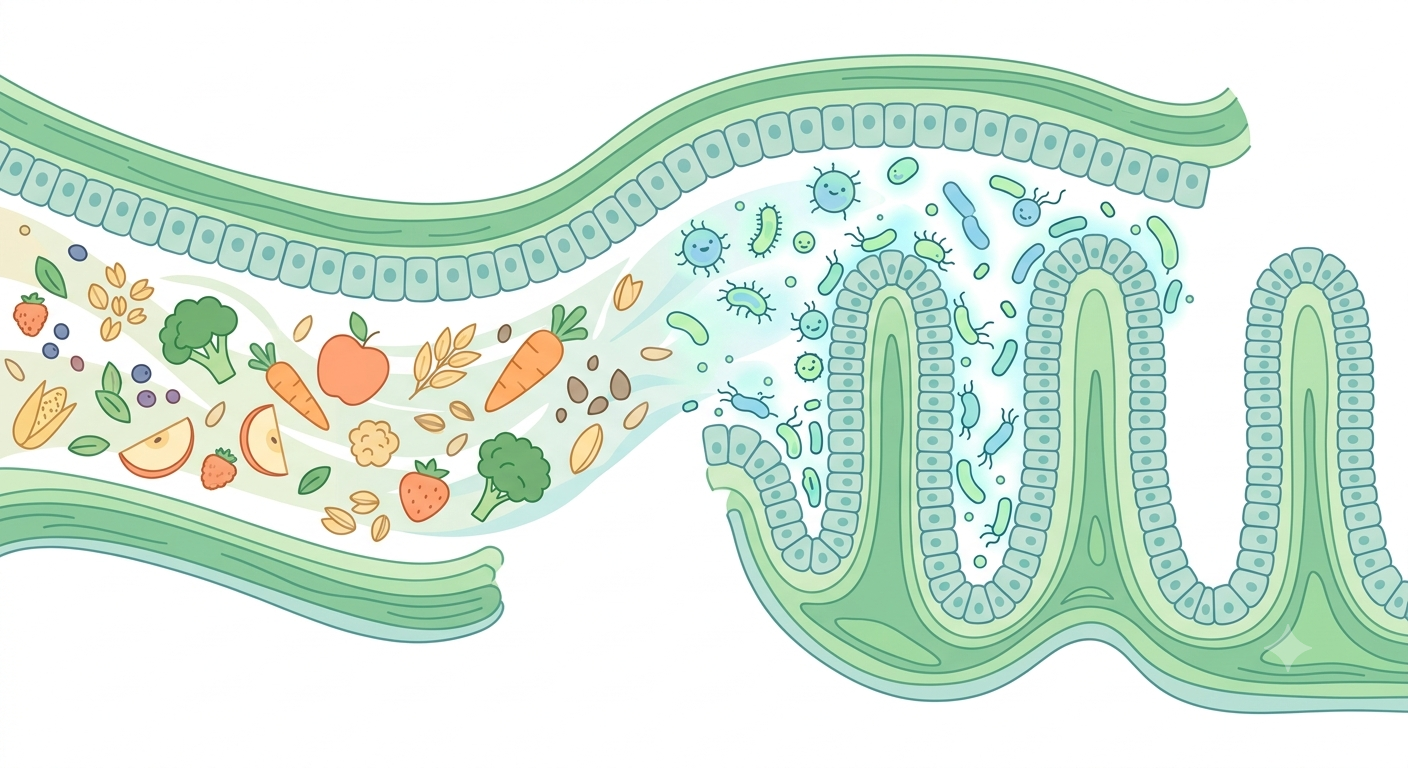
Fibres are plant components that our digestive system cannot digest alone. Unlike carbohydrates or proteins, they cross the stomach and small intestine without being decomposed, to arrive almost intact in the colon. This is where the magic works: the billions of bacteria that make up our intestinal microbiota take and ferment them, i.e. they transform them by producing substances beneficial to the organism, including short chain fatty acids ( molecules that play a key role in intestinal health and beyond).
Two large fibre families are distinguished according to their behaviour in water:
– Soluble fibres (which are found in fruit pectin, chicory linulin, psyllium, oats or barley) dissolve in water and form a kind of viscous gel in the intestine. They slow transit, help regulate blood sugar after meals, and effectively feed the right bacteria.
– Insoluble fibres (present in the sound of wheat, whole grains or some vegetables) do not dissolve. They increase the volume of stools by a simple mechanical swelling effect, which accelerates transit.
There is also a third less well-known characteristic: fermentability, i.e. the ability of a fibre to be « digested » intestinal bacteria. Surprisingly, some insoluble fibres such as resistant starch or arabinoxylan are very fermentable, while others such as cellulose are almost not. It is this fermentability that will determine the real impact of a fibre on the microbiota.
A precious fuel for your good intestinal bacteria
Each fibre family preferentially feeds certain bacterial populations, a bit like different fertilizers for different plants. Inulin and fructo-oligosaccharides (or FOS), present in chicory, garlic, onion or topinambour, selectively stimulate the growth of bifidobacteria and lactobacilli, two families of bacteria considered beneficial. An intake of about 10 grams per day in adults is sufficient to observe this effect. The galacto-oligosaccharides (GOS), which are found in fermented dairy products in particular, act in a similar way and are also the prebiotics naturally present in breast milk, where they protect infants from infectious diarrhea.The beta-glucans of oats and barley increase the overall diversity of the microbiota and favour bacterial families producing a key substance, butyrate. An analysis of 28 clinical studies showed that 3 grams of beta-glucans oats per day reduces bad cholesterol (LDL) by about 0.25 mmol/L, which explains why European and American health authorities recommend 3-4 grams per day for cardiovascular health. Psyllium, derived from Plantago ovata seeds, showed particularly marked effects in constipated individuals in a reference study, with an increase in butyrate-producing bacteria correlated with improved stool hydration. Pectin is abundant in apples, citrus fruits and ba
A reinforced intestinal barrier, junction by junction
The intestine is not a simple inert tube: its wall is a living barrier that must filter out what can pass through the blood while blocking the unwanted elements. This seal is based on « tight junctions », real molecular locks between intestinal cells, regulated by a protein called zonulin. When the zonulin is too active, these locks open more and the intestinal permeability increases, a phenomenon sometimes referred to as the term d« permeable intestine » or leaky gut.
Good news: prebiotic fibers close these locks. Inulin supplementation to 10 grams per day reduces zonulin levels in just five days. The central mechanism of this strengthening is butyrate, produced during the fermentation of fibers (especially resistant starch), which activates an enzyme called AMPK and promotes the assembly of these tight junctions.
The intestinal barrier also includes a protective mucus layer, secreted by specialized cells, which prevents direct contact between bacteria and the intestinal wall. A fibre-rich diet directly stimulates the production of this protective mucus. Conversely, a low fibre diet causes some bacteria to feed on this layer of mucus itself, thereby weakening the barrier. Pectin and polyphenols particularly favour the bacterium Akkermansia muciniphila, which actively contributes to the maintenance of this protective mucosa.
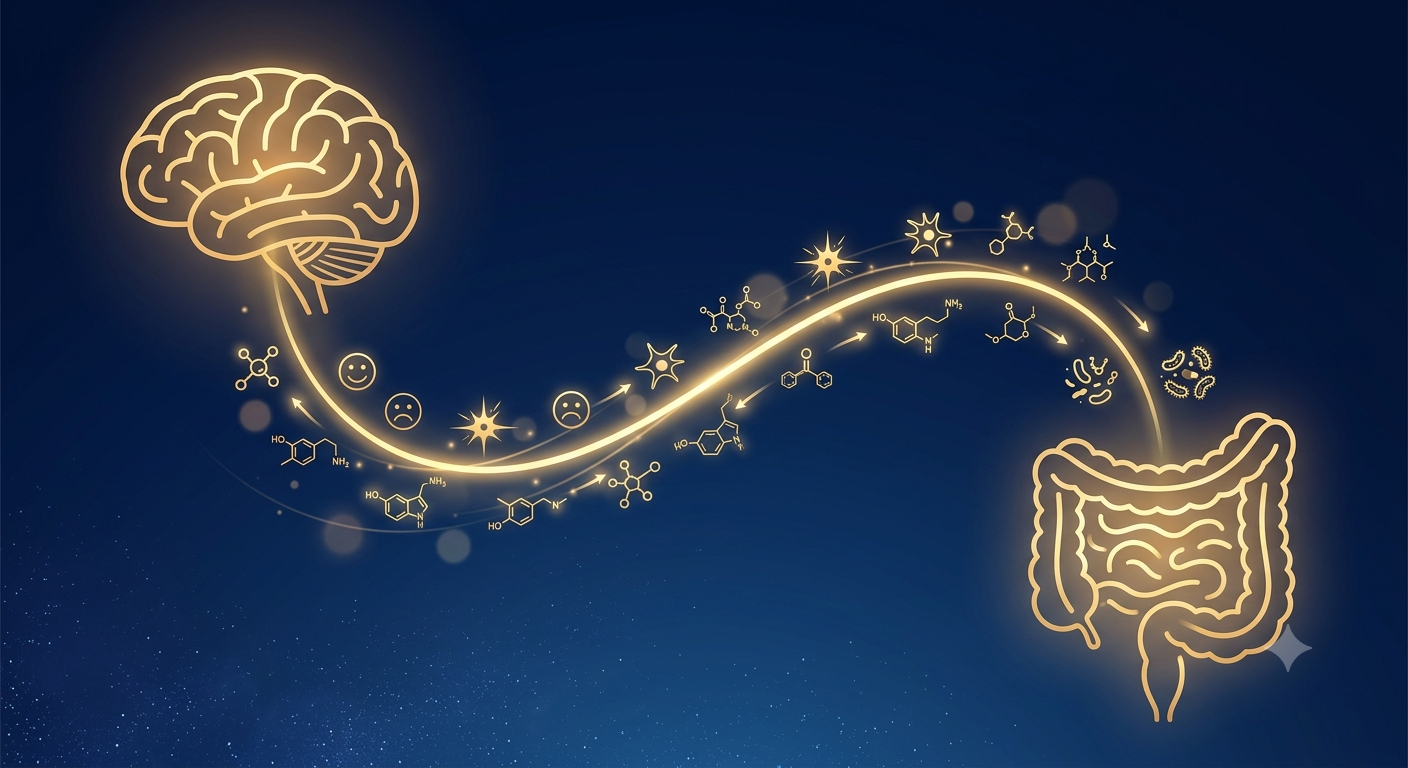
This is one of the most surprising aspects revealed by recent research: the intestine communicates directly with the brain via the vague nerve, a nerve highway of which 80 to 90% of fibers carry information from the intestine to the brain. This circuit, called the microbiota-intestinal-brain axis, makes feeding a real lever on our mental state and our eating behaviour.
In concrete terms, the substances produced by the fermentation of fibres directly activate the end of this nerve in the colon. They also stimulate certain intestinal cells to release two satiety hormones, GLP-1 and PYY, which then borrow the same nerve to signal to the brain that it is satisfied. This circuit explains in part why a diet rich in fiber helps naturally regulate appetite.
Wave nerve also has an unknown anti-inflammatory role. When activated, it releases a substance that calms some immune cells from the intestine, reducing local inflammation. It is precisely the substances resulting from the fermentation of the fibres that stimulate this soothing vagal tone, creating a virtuous loop: more fiber, more protective vagal activity, less intestinal inflammation.
Another significant discovery: about 95% of the human body serotonin, often called « Well-being hormone », is produced in the intestine by specialized cells, whose activity is directly influenced by the microbiota and therefore by the fibres consumed. Studies in mice without microbiota have shown a significantly reduced production of brain serotonin, illustrating the extent to which food influences brain chemistry.
Fibers that regulate transit, each in its own way
An effect on immunity, not just digestion
Why fibre diversity is the key
Some precautions to be taken
Before significantly increasing fibre consumption, some common sense rules are required, directly from the available scientific data:
– Increase the fibre intake gradually, to avoid bloating and gas, especially with fast fermenting fibres.
– Pay attention to irritable bowel syndrome, as some fermentable fibers can sometimes worsen symptoms; Psyllium is generally well tolerated in this case.
– Drink enough water during any increase in fibre intakes, especially with glucomannane or psyllium, which absorb a lot of liquid.
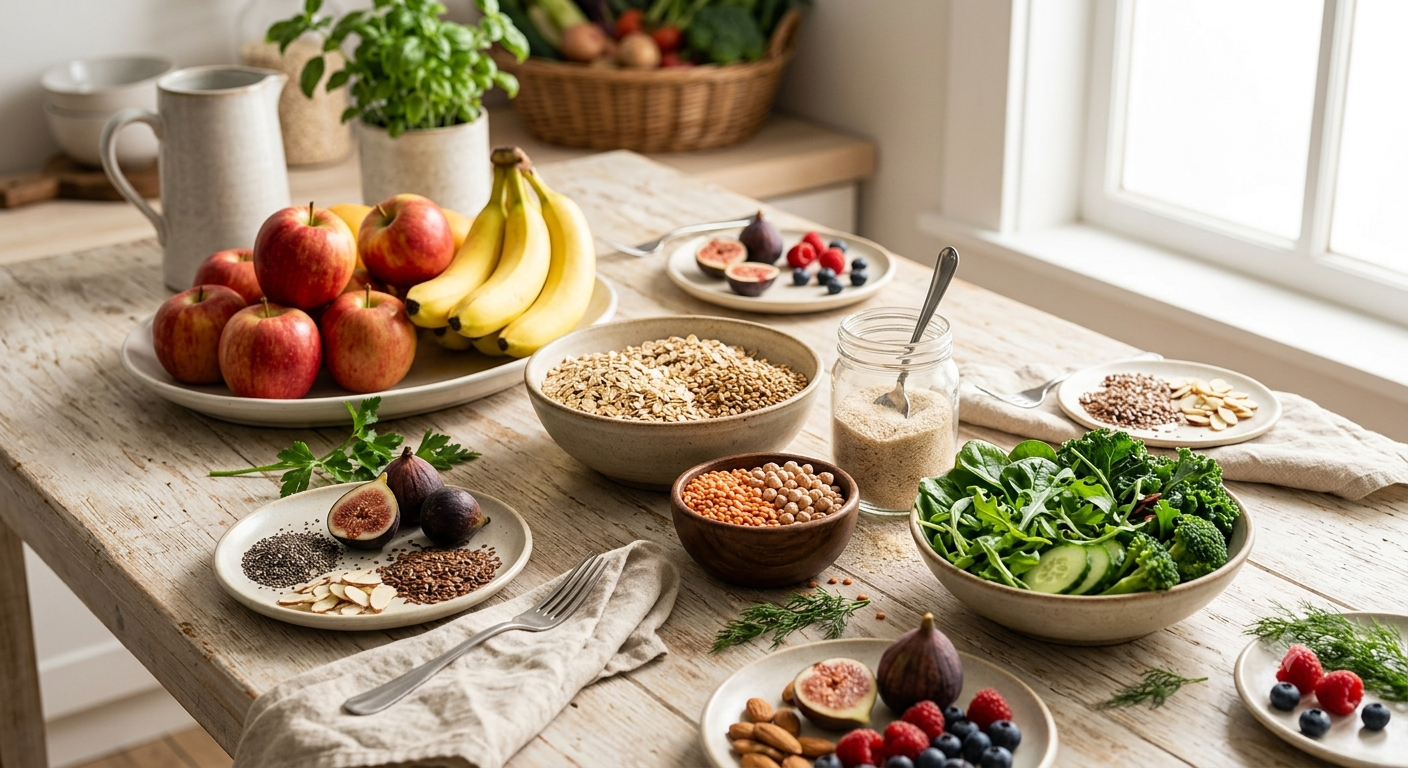
Much more than just one « Good transit », dietary fibers thus appear as a real tool for the overall regulation of the organism, acting on the microbiota, intestinal barrier, immune system and even communication between the intestine and the brain. Focus on the diversity of plant sources on a daily basis — vegetables, fruit, legumes, whole grains — remains the simplest and most effective strategy to reap the benefits.
__________________________
Our health and sports experts help you build the right habits, lasting. Make an appointment to discuss it.
@Lonhea – Patented Method

