
Microbiota and chronic diseases: understanding the links between intestine, inflammation and brain
In several chronic diseases, changes in the intestinal microbiota are observed alongside inflammation and disturbances in cell function. But a precaution is essential: finding these phenomena together does not mean that the intestine is at the origin of all these diseases. To understand these links, one must look at how different systems interact, without confusing association with cause.
The intestinal microbiota: an ecosystem whose functions count
Some bacteria are involved in the production of short chain fatty acids, often abbreviated in AGCC. Among them, butyrate plays several roles: it provides energy to cells lining the colon, helps maintain the intestinal barrier and helps regulate immune responses.
A decrease in butyrate-producing bacteria is commonly observed in several diseases, including type 2 diabetes and Parkinson's disease. However, this alone does not explain their appearance.
What the word means « dysbiosis » ?
Age, diet, intestinal transit, medicines and other diseases present can influence the results. For example, in a person with Parkinson, constipation and treatments may explain some of the differences observed in the microbiota.
Dysbiosis can therefore contribute to certain mechanisms, result from disease or reflect other factors. These possibilities do not necessarily exclude.
The intestinal barrier: an interface that can weaken
They can be imagined as assembly points between cells. When their operation is altered, the permeability of the barrier may increase and facilitate the passage of certain microbial components.
These components include lipopolysaccharides, or LPS. Their passage can activate immune defense mechanisms and promote the production of inflammatory signals. However, the consequences depend, in particular, on the quantity that crosses the barrier and the body's ability to manage these substances. An isolated dosage is therefore not sufficient to describe this entire chain of reactions.
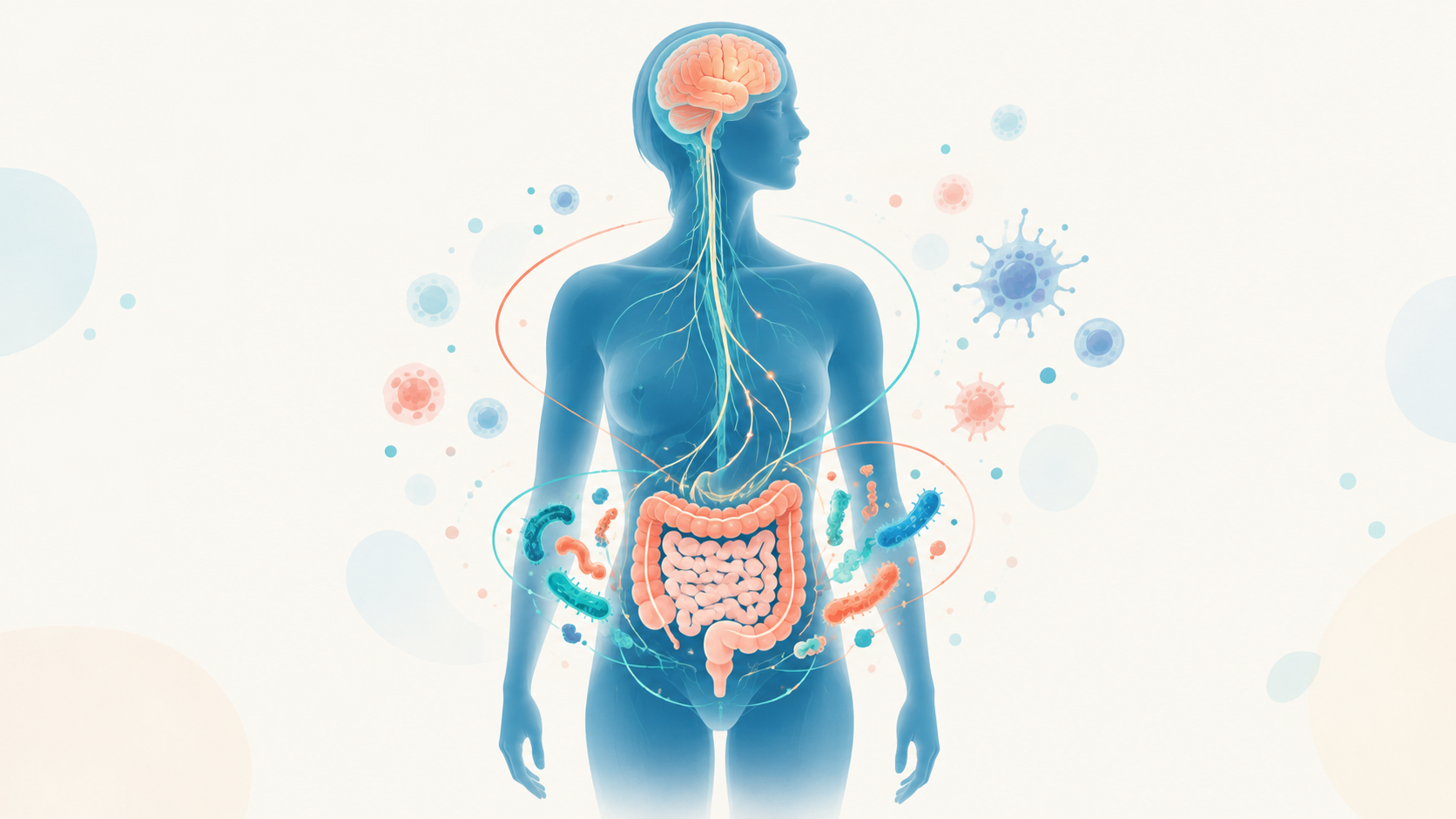
The intestine may also be affected by a disease elsewhere
Exchanges are not only from the intestine to the other organs.
In heart failure, for example, the accumulation of blood in the venous network, swelling of intestinal tissue and inadequate irrigation can weaken the intestinal wall. A loop can then settle between heart attack, intestinal disturbance and inflammation. This example shows why it would be more restrictive to say that « all starts in the intestine ». This can also be secondary affected.
Inflammation and mitochondria: a loop that can self-maintain
When their functioning deteriorates, cells may have less energy to carry out their activities. These disturbances affect different tissues according to the diseases: muscle and liver in type 2 diabetes, heart cells in heart failure or some neurons in neurodegenerative diseases
What is oxidative stress?
The relationship with inflammation works in both directions:
1. Inflammation can disrupt mitochondria.
2. Damaged mitochondria can produce more ROS.
3. They can also release elements that activate immune defenses.
4. This activation can maintain inflammation.
It is therefore not always a succession of independent events, but a loop in which several mechanisms are strengthened. This interaction is particularly documented in heart failure and neurodegenerative diseases.
How can these mechanisms affect the brain?
These phenomena can also weaken the bloodbrain barrier, the interface between blood and brain tissue.
Other cells than neurons are involved in these mechanisms, including microglia and astrocytes. These cells are involved in the functioning of brain tissue and can change state during diseases, with possible consequences on the connections between neurons and their survival.
Different impacts depending on disease
The brain consequences are not identical from one disease to another:
* In high blood pressure, the damage to the white substance and certain cerebral circuits may affect attention and executive functions, i.e. the ability to organize and control its actions.
* In type 2 diabetes, several mechanisms combine, including the effects of excess glucose, small vessel damage and brain inflammation.
* In Alzheimer's disease, hippocampus and entorhinal cortex are among the first vulnerable areas.
* In multiple sclerosis, the lesions include myelin, the envelope surrounding the nerve extensions, and the cells that produce it.
These observations highlight inter-system interactions. They do not mean that a modification of the microbiota necessarily results in brain damage.
Wave nerve and cardiac variability: links to be interpreted with caution
The vague nerve contributes to the transmission of information on the state of the organs to the brain stem. It also intervenes in regulatory circuits involved in inflammatory response.
Heart variability, also known as heart rate variability or HRV in English, is often studied in this context. It describes the variations in the intervals between heartbeats.
Some of its indicators, such as RMSSD and HF power, provide information on parasympathic modulation in the short term: a component of nerve heart regulation. But cardiac variability remains an indirect indicator. It does not measure the activity of all branches of the wave nerve.

Low value cannot diagnose disease
* age and heart rate;
* breathing and posture;
* sleep, pain and acute stress;
* medicines;
* the duration and conditions of measurement.
There is no universal normal value applicable to everyone. A low measure does not prove a vague nerve injury or the presence of a particular disease. Monitoring of the same person under comparable conditions is more relevant than an isolated comparison with a general threshold.
What links are observed in chronic diseases?
|
Disease or group of diseases |
Main links observed |
|
Obesity and metabolic syndrome |
Microbiota changes, inflammation of adipose tissue and disturbances of mitochondrial function. |
|
Type 2 diabetes |
Frequent decrease in butyrate producers, inflammation and energy disturbances in muscle, liver and insulin-producing cells. |
|
Heart failure |
Possible fragilisation of the intestine due to circulatory disorders, inflammation and energy deficiency of the cardiac cells. |
|
Chronic intestinal inflammatory diseases |
Dysbiosis and alteration of the barrier located directly in the sick organ, with inflammation and mitochondrial disturbances. |
|
Chronic renal disease |
Intestinal changes, accumulation of so-called uremic substances and effects on vessels and mitochondria. |
|
Major depression |
Heterogeneous microbiotic results; inflammation in a subgroup of patients and lower cardiac variability on average. |
Why isn't an association proof of cause?
Observing a change in the microbiota in sick people is not sufficient to demonstrate that it caused the disease.
There are three possible explanations:
* The change contributes to certain mechanisms of the disease.
* The disease changes the intestinal environment.
* Another factor, such as treatment or transit, influences both microbiota and observations.
Studies showing associations are more numerous than tests showing causal link. Therefore, the proposed mechanisms must be distinguished from their usefulness in making a diagnosis or choosing a treatment.
To date, a microbiota profile obtained from stools alone does not make it possible to diagnose the diseases presented here individually. Similarly, a measurement of cardiac variability is not a specific diagnostic test.
Frequently asked questions about microbiota and chronic diseases
Do all chronic diseases start in the intestine?
Is butyrate important for the intestinal barrier?
Does the microbiota detect Alzheimer's disease?
Does low cardiac variability mean that the wave nerve works badly?
Not by herself. It may reflect changes in cardiac regulation, but many factors influence measurement. It does not make it possible to conclude that there is an overall damage to the vague nerve.
To remember: connected systems, not a single cause
Understanding these links helps to overcome a vision in which each organ would function independently of the others. But this global approach must retain an essential limit: a common mechanism does not mean a single origin or identical diagnosis. The distinction between what is observed, what is demonstrated and what remains to be confirmed remains indispensable.
__________________________
This article has a purely informative and educational vocation. Under no circumstances does it replace a medical opinion. If you have any doubts or symptoms, consult a healthcare professional.
@Lonhea – Patented Method

